
What a Gamified Learning Platform Actually Means
Gamification isn’t cartoons and confetti. Done seriously, it’s behavioural engineering: instant feedback loops, visible progression and social pressure aimed at one goal — making daily practice inevitable.
Every addictive product shares a spine: clear goals, immediate feedback, escalating challenge and social proof. Education usually has none of these — feedback arrives weeks later as marks, progress is invisible, difficulty is arbitrary. CompeteHub rebuilds exam preparation on the addictive spine while keeping the substance rigorously academic.
The Seven Mechanics Doing the Work
| Mechanic | Psychological lever | Preparation payoff |
|---|---|---|
| XP & levels | Progress visibility | Volume of quality attempts climbs steadily |
| Bronze→Grandmaster ranks | Identity investment | Students defend rank like gamers defend tiers |
| ELO matchmaking | Optimal challenge | Opponents stretch you without crushing you |
| Streaks & dailies | Loss aversion | Consistency survives bad weeks |
| Achievements | Milestone dopamine | Long journeys get celebrated in chunks |
| Leaderboards | Social comparison | Effort becomes publicly legible |
| Seasonal resets | Fresh starts | Lapsed players rejoin without stigma |
Where Gamification Goes Wrong – and Our Guardrails
- <strong>Style over substance:</strong> points for meaningless taps — here, XP flows only from real question engagement.
- <strong>Pay-to-win:</strong> premium buys cosmetics and analytics, never answers or advantages.
- <strong>Addiction without aim:</strong> session lengths are naturally bounded by match formats — designed for daily return, not infinite scrolling.
- <strong>Vanity metrics:</strong> leaderboards weight accuracy and competitive wins, not just raw clicks.
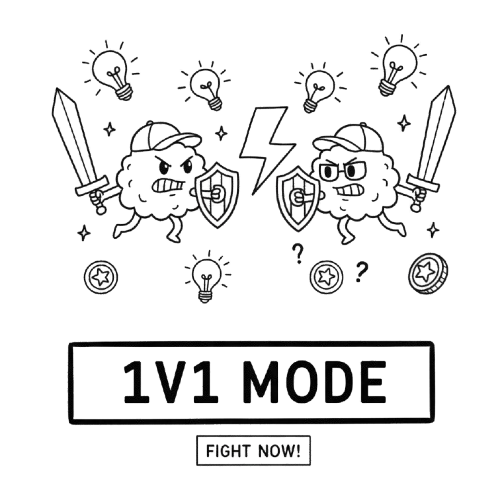
See the mechanics in their natural habitat: climb ladders via ranked duels, maintain chains through the daily quiz system, or bring friends into the economy with multiplayer battles.
Frequently Asked Questions
Does gamification actually improve learning outcomes?
Decades of research on retrieval practice, spaced repetition and goal-gradient effects say yes when mechanics drive genuine practice. Gamification amplifies proven techniques; it doesn’t replace them.
Won’t students play easy games for XP farming?
Matchmaking and scoring weight accuracy and opponent strength, so farming low-value activity yields little; climbing requires beating real opposition on real questions.
Is the competitive pressure unhealthy?
Ladders are opt-in and tiered so everyone competes at their level; seasonal resets give fresh starts, and solo modes exist for low-pressure phases.
Which age groups is it designed for?
Primarily Class 11–12 students and droppers preparing JEE/NEET, plus college graduates for GATE/UPSC/CAT — older teens and adults who enjoy competitive gaming culture.
How do I start experiencing it?
Open the web app in guest mode and play anything — XP, dailies and leaderboards work immediately; registration simply persists your journey.
Motivation is a system, not a mood
Borrow the psychology that keeps gamers grinding — aim it at your rank card.
Experience the System